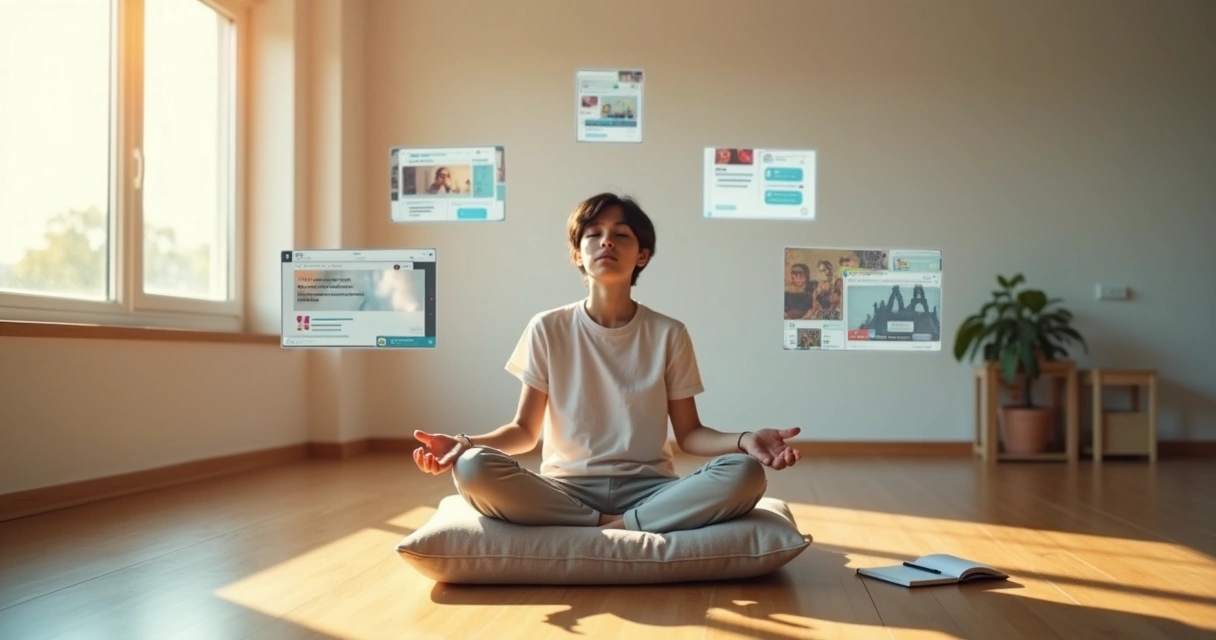


Self-soothing can help a group make better decisions by helping individual members stay attentive, consider other views, and communicate disagreement without reacting impulsively. It does not guarantee a sound outcome or mean that tension should be hidden. For teams facing pressure, the useful question is whether a brief personal reset improves participation and gives the group more room to think.
Key takeaways
- Self-soothing supports the conditions for thoughtful participation, but it cannot replace evidence or a sound decision process.
- Calm is not the same as agreement. Useful dissent should remain welcome.
- Stress does not affect every person or task in the same way, so avoid treating a calming technique as a universal solution.
- Pair individual pauses with fair processes, such as silent reflection, structured turn-taking, and explicit review of alternatives.
Self-soothing can improve participation, not guarantee the decision
A brief self-soothing practice may change how a person contributes to a discussion. When someone notices rising frustration, steadies their attention, and chooses words deliberately, they may be better able to distinguish a concrete risk from an immediate emotional reaction.
That difference matters in a decision meeting. Imagine a team responding to a supplier failure. A frustrated member might push for an immediate replacement, while a calmer pause could help them explain the risk, hear a colleague’s concerns about cost, and compare options against agreed criteria.
The reset does not make one option correct. It can help keep a strong feeling from taking over how information is shared or heard. Teams exploring emotional narratives in group decisions can also consider how personal interpretations shape what members notice and emphasize.
Research suggests stress effects depend on the person and task
It would be too simple to claim that stress always damages judgment or that self-soothing reliably improves group outcomes. Research on stress and cognitive flexibility has found differing effects across studies and tasks.
A 2019 study of undergraduate students found that an acute social-evaluative stressor was associated with better performance on a specific set-shifting task, though the effect was smaller when participants saw the situation as uncontrollable. A separate 2016 experiment found that acute stress impaired cognitive flexibility in male participants, but did not significantly affect women. These findings concern individuals completing laboratory tasks, not real-world group decisions, so they should not be treated as direct proof that a meeting technique improves team outcomes. The 2019 study on stress and set-shifting and the 2016 cognitive-flexibility experiment illustrate why context matters.
Group members’ emotions can also affect how a team processes a complex decision. A study on group affect and decision-making describes relationships between mood and the cognitive styles groups use, rather than a single emotional state that always leads to better choices. This supports a cautious conclusion: a self-soothing pause may help someone re-enter the discussion more constructively, but the quality of the group’s process still matters.
Why a personal reset can change the group conversation
A self-soothing technique is most useful when it changes what happens next. A member who pauses before responding may ask a clarifying question instead of making a personal accusation. Someone who recognizes anxiety may name a specific uncertainty the team needs to examine, rather than silently agreeing to end the discomfort.
These small changes can protect useful disagreement. The goal is not to make the room uniformly pleasant. It is to keep discomfort from automatically turning into interruption, withdrawal, rushed agreement, or pressure to choose the first acceptable option. Teams can strengthen this effort by examining how emotional authenticity shapes consensus.
Self-regulation also does not mean every member must handle tension alone. A facilitator can make space for quieter voices, clarify the decision criteria, and slow the meeting when discussion becomes reactive. This supports the broader idea that individual self-regulation can support group creativity when the team also has room to contribute.
A short reset can help members return with clearer input
Use a low-key pause when you notice that emotion is affecting your attention or tone. Choose a technique that feels comfortable and does not require other people to join in.
- Notice what is happening. Name the feeling privately, such as frustration, urgency, or worry.
- Reconnect with the present. Feel your feet on the floor, notice the chair supporting you, or take a comfortable breath.
- Separate the concern from the conclusion. Ask what you know, what you are assuming, and what information is missing.
- Return with a specific contribution. State the concern, question, or evidence you want the group to consider.
These steps are prompts, not a required script. If the issue is serious or the discussion remains heated, a short break may be more useful than continuing to speak before you are ready. A practical meeting routine for emotional presence can help teams make pauses feel normal rather than like a sign of failure.

Pair self-soothing with fair decision rules
Personal regulation is only one part of a responsible group decision. A calm person can still be mistaken, and an emotionally charged objection can still contain valuable information. Teams need procedures that make it possible to hear both without treating volume or composure as proof.
Before deciding, ask members to write down their initial views, then invite each person to speak before open debate. Name the criteria the group will use, record unresolved risks, and distinguish “we agree” from “we have heard the options and can proceed.” If pressure is high, agree on a return time and the evidence needed before taking a break.
Leaders can model this balance by acknowledging tension without shaming anyone for feeling it. Their role is not to force a calm mood, but to help the group stay curious, accountable, and clear about consequences. In that way, self-soothing becomes one support for a more mature decision process, not a demand that individuals suppress emotion.
Frequently asked questions
Can self-soothing improve group decisions?
It can support better decisions by helping people stay present, listen accurately, and share concerns without reacting impulsively. That does not guarantee a better choice: decision quality also depends on relevant information, fair participation, and clear criteria. Research on self-soothing directly improving group outcomes is limited, so treat it as a useful support, not a proven fix.
Which self-soothing techniques work during meetings?
Choose a discreet practice that helps you pause without leaving the discussion: feel your feet on the floor, notice a few details in the room, take a comfortable breath, or name the emotion you are experiencing. The aim is not to erase the feeling. It is to create enough space to respond thoughtfully.
Does self-soothing prevent groupthink?
No. A person may feel calmer and still agree too quickly because of hierarchy, time pressure, or fear of disagreement. Self-soothing can make it easier to voice a concern, but groups also need processes that invite dissent, such as silent individual input, a round-robin, and explicit review of alternatives.
Should a team pause a decision when emotions run high?
Pause when strong emotion is making it hard to listen, compare evidence, or explain concerns clearly. A short reset can help, but some decisions need a longer break or more information. Agree on when the group will reconvene and what it still needs to resolve, so pausing does not become avoidance.