

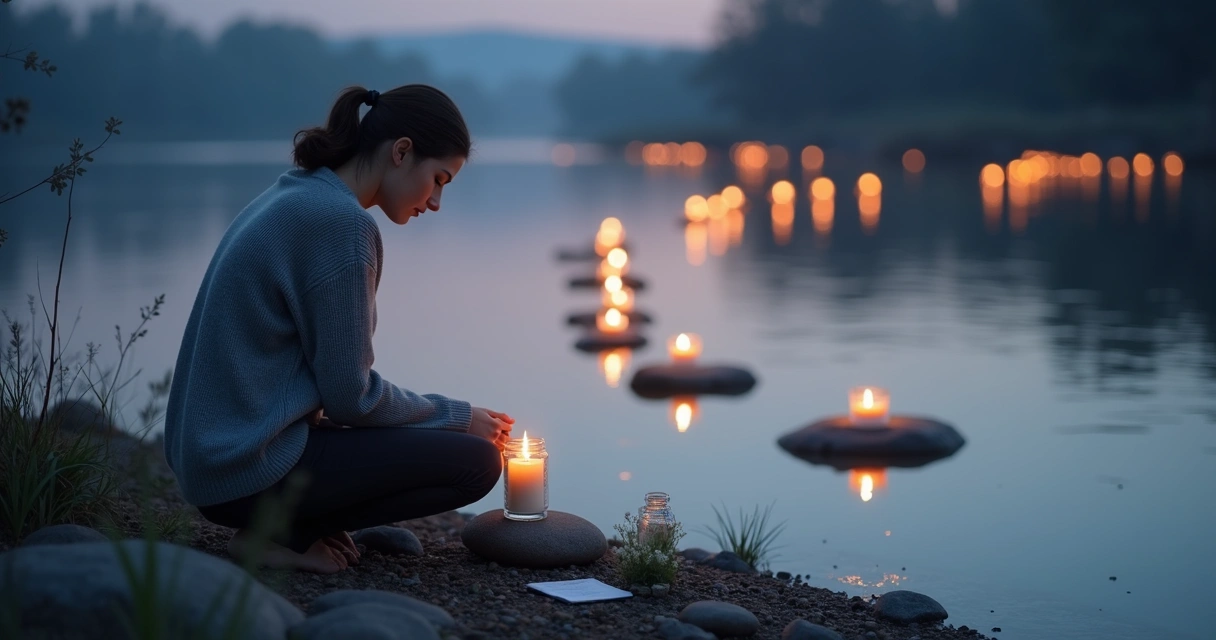
Loss changes the air around us. A room feels different. A morning feels heavier. Even simple tasks can seem far away. In our experience, grief does not only live in thought. It lives in the body, in memory, in silence, and in the spaces where someone or something used to be.
That is why grief rituals matter. They give shape to what feels shapeless. They offer a moment, an action, and a place for pain to move. Grief rituals are intentional acts that help us express sorrow, honor what was lost, and stay connected to meaning.
We often think of rituals as formal or religious, but they can also be personal and quiet. A candle lit at dusk. A letter never sent. A meal cooked from memory. These acts may look small from the outside. Inside, they can carry real emotional weight.
Ritual gives grief a place to land.
Why rituals help after loss
Grief can feel disorganized. One moment we are numb. The next, we are angry or flooded by memory. A ritual does not remove pain, but it creates a container for it. We think this is one of the deepest reasons rituals help. They bring rhythm when life has been broken open.
Rituals also help us do something with love that no longer has its usual direction. When a person dies, or when another kind of loss happens, care has nowhere obvious to go. Through ritual, care can still be expressed.
There are a few ways this support tends to happen:
Ritual slows us down enough to feel what we have been avoiding.
It gives the body a role, through movement, breath, touch, or posture.
It makes memory active instead of distant.
It helps us feel less alone, especially when shared with others.
We have seen that people often need permission to grieve in a visible way. Ritual can be that permission. It says, without many words, that this loss is real and worthy of care.
Public and private forms of grief
Some rituals are collective. Funerals, memorial gatherings, prayer circles, and anniversary ceremonies help a community witness pain together. Other rituals are deeply private. A person may visit a certain bench every week, water a plant, or keep a voice message and listen to it when the house is quiet.
Both public and private rituals can support healing, because grief needs both witness and inner space.
We also need to say this clearly. Not every loss receives the same social recognition. The grief after miscarriage, divorce, estrangement, job loss, migration, or the decline of a loved one through illness can be pushed aside by others. When that happens, personal ritual becomes even more meaningful. It restores dignity to what hurts.
When usual rituals are disrupted
There are times when people cannot grieve in the way they hoped. Distance, conflict, sudden death, or public restrictions may interrupt the rituals that normally bring comfort. This can deepen distress, because the emotional process has fewer places to settle.
A survey of bereaved people in Ireland during COVID-19 found that 47.5% could not hold the funeral or ritual they wanted, 68.6% had family or friends excluded from funerals, and 54.6% still found some available rituals comforting despite those limits. We think this shows something very human. Even when conditions are imperfect, meaningful symbolic acts still help.
This matters for anyone carrying regret about how a goodbye happened. The first ritual is not the only ritual. We can return. We can create another moment. We can mark the loss again in a way that feels more honest now.
Simple grief rituals that can help
The most helpful ritual is often the one that feels true, not the one that looks impressive. If we force a gesture that does not fit our emotional state, it can feel empty. A good ritual should be gentle enough to approach and clear enough to hold meaning.
Here are some forms that many people find supportive:
Lighting a candle at the same time each day or week.
Writing a letter to the person, place, or part of life that was lost.
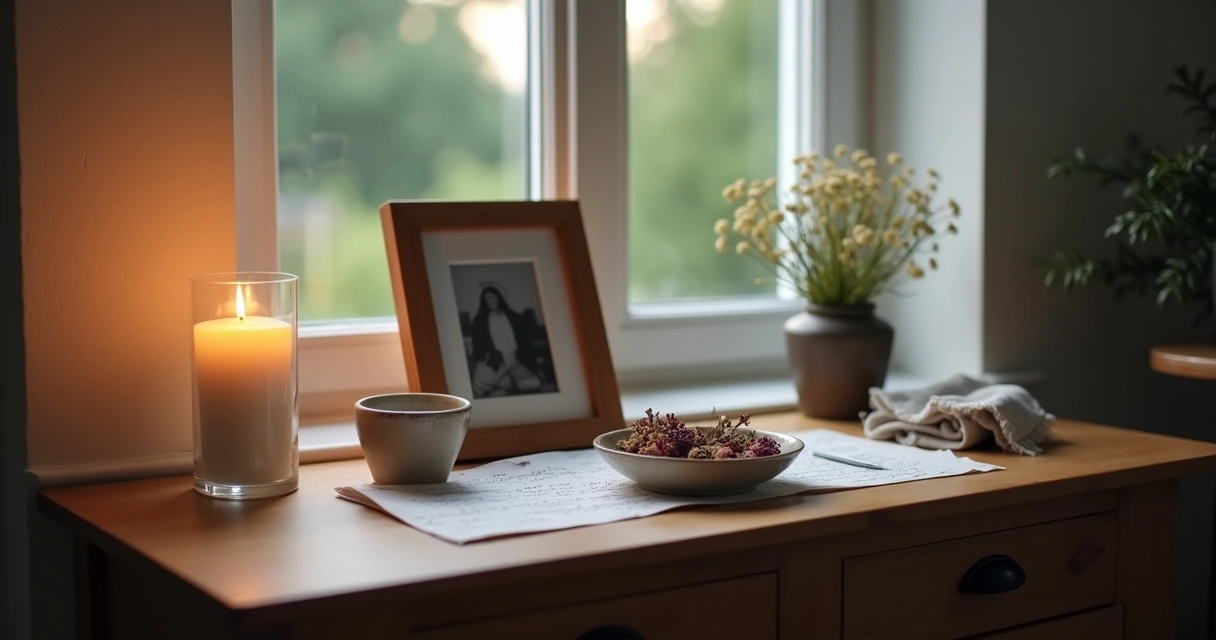
Creating a memory box with photos, objects, and notes.
Cooking a meal linked to shared moments and eating it with intention.
Walking a familiar route and speaking memories out loud.
Planting a tree, flower, or herb as a living marker of remembrance.
We suggest keeping the act simple enough that it can be repeated if needed. Repetition has value. Grief does not move in a straight line, so one ritual may become a steady point across many months.
How to create a personal ritual
When people ask us where to begin, we usually suggest starting with three questions. What was lost. What needs to be expressed. What kind of action feels honest right now. These questions help turn raw feeling into a form that can be held.
You might build a ritual in this order:
Name the loss clearly, even if the words feel hard.
Choose a symbol such as a candle, photo, song, stone, or piece of clothing.
Add one action, like writing, breathing, walking, speaking, or sitting in silence.
Set a time and place, so the ritual has shape and safety.
A personal grief ritual does not need rules from outside. It needs emotional truth.
We have noticed that some of the strongest rituals are very quiet. Someone folds a scarf and places it in a drawer with care. Someone reads the same poem every birthday after a death. Someone sits by the garden for ten minutes at sunrise. Small acts. Real impact.

Rituals for shared healing
Grief is personal, but it also affects families, friendships, and groups. Sometimes one person wants to talk and another does not. One wants tears, another wants silence. Shared ritual can hold these differences without forcing everyone into the same style.
We have seen group rituals work well when they leave room for choice. A family gathering might include a few readings, a table of photos, time for silent reflection, and an open invitation to share a story. No pressure. Just presence.
Some shared rituals may include:
An annual remembrance meal.
A circle where each person brings one memory.
A donation or act of service in honor of the loss.
A music playlist played on a meaningful date.
What matters most is emotional safety. If conflict is active, a smaller or more private ritual may work better than a large gathering.
When extra support is needed
Rituals can support healing, but they do not replace care when grief becomes overwhelming. If someone feels unable to function for a long period, has intense despair, or feels disconnected from life in a frightening way, added support may be needed. Reaching out is not failure. It is a sign that the pain deserves company.
We believe healing grows when emotion is given form, witness, and time. Ritual can offer all three. It does not ask us to be finished with grief. It only asks us to meet it with more presence.
Conclusion
Grief rituals help us turn sorrow into action, memory into presence, and love into a form that can still be lived. They do not erase loss. They help us stay in relationship with it in a healthier way. Whether the ritual is shared with many people or held in private silence, what heals is the honesty inside the act. When we give grief a place, we also give healing a place to begin.
Frequently asked questions
What are grief rituals?
Grief rituals are intentional actions that help us mourn a loss, express emotion, and honor memory. They can be formal, cultural, spiritual, or personal, such as funerals, candle lighting, letter writing, or remembrance walks.
How do grief rituals help healing?
They help by giving structure to painful feelings, creating space for expression, and linking memory with meaning. Rituals can calm the body, reduce isolation, and offer a steady way to process grief over time.
What are common grief rituals?
Common grief rituals include funerals, memorial services, prayer, lighting candles, visiting a grave or meaningful place, keeping memory objects, cooking a loved one’s favorite meal, and gathering on anniversaries to share stories.
Can I create my own grief ritual?
Yes. Many people create personal rituals that reflect their relationship with the loss. You can choose a symbol, a simple action, and a regular time or place. The ritual only needs to feel sincere and emotionally meaningful to you.
Where to find grief support groups?
You can find grief support groups through local hospitals, community centers, faith communities, hospice services, mental health clinics, and bereavement organizations in your area. If in-person options are limited, many communities also offer online support spaces.