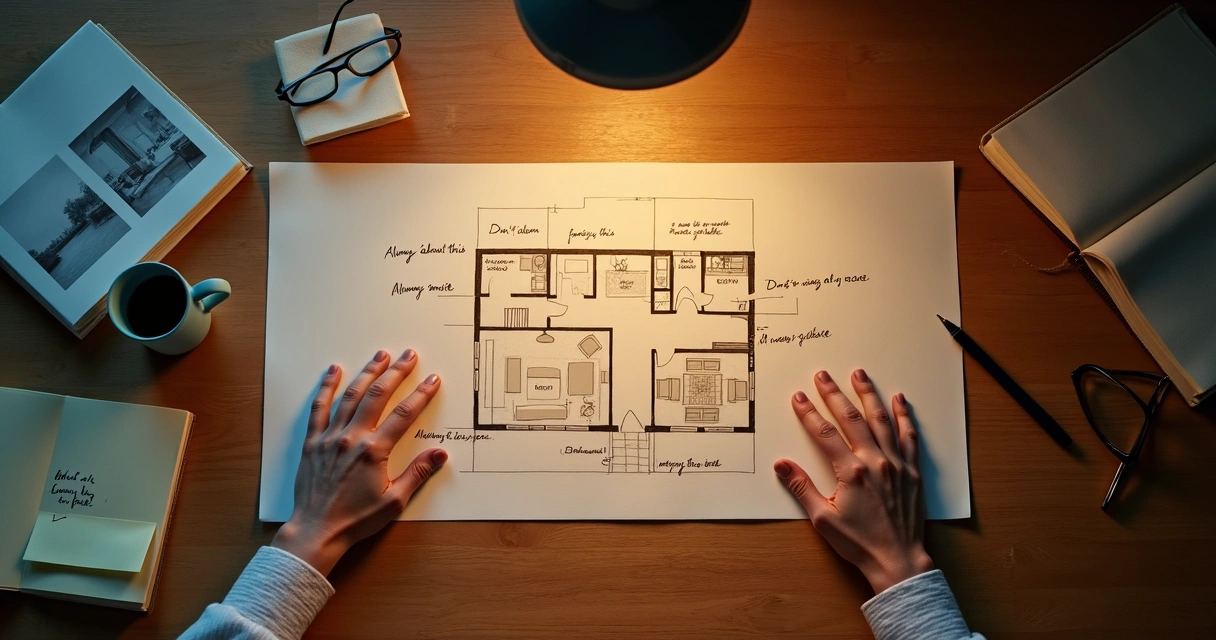


Emotional enmeshment at home can look caring from the outside. We may call it closeness, loyalty, or deep love. But inside the house, it often feels heavy. One person’s mood fills every room. Privacy starts to look selfish. Guilt appears the moment someone asks for space.
Emotional enmeshment happens when family members lose clear emotional boundaries and begin to carry each other’s inner lives as if they were their own.
We have seen how this pattern grows quietly. A parent wants to stay connected. A partner wants reassurance. A child learns that peace at home depends on reading everyone else first. At first, it seems adaptive. Later, it becomes draining.
This is not just a matter of style. Research on overparenting, a pattern related to enmeshment, found links with depression, anxiety, and internalizing symptoms in young adults across different cultures and income groups, as shown in a meta-analysis of 52 studies on overparenting. Other findings also connect family enmeshment with emotional dysregulation and even shifts in autonomic regulation, according to research on family enmeshment and emotional regulation.
Closeness is not the same as fusion.
The good news is that enmeshment can be softened. We can change how we relate without turning cold or distant. Below are seven practical ways to begin at home.
1. Name the pattern without blame
The first step is simple, but not easy. We need language for what is happening. In many homes, nobody says, “We are too emotionally tangled.” Instead, people say things like “We tell each other everything,” or “We are just very attached.”
Sometimes a story makes it clearer. We may picture a daughter who feels guilty for enjoying a quiet evening because her mother seems lonely. Or a partner who cannot relax until the other partner feels calm. In both cases, one person’s inner state takes over the other’s.
When we name enmeshment, we stop confusing overinvolvement with love.
Use plain observations:
“We react fast to each other’s moods.”
“We feel guilty when someone wants space.”
“We share feelings, but we do not always separate what belongs to whom.”
This lowers shame and opens the door to change.
2. Separate support from emotional rescue
Many of us were taught that love means fixing distress fast. At home, this can turn into constant emotional rescue. We interrupt, soothe too quickly, advise too much, or absorb another person’s tension as if it were our task.
Support is different. Support stays present without taking over.
We can ask:
“Do you want comfort, ideas, or just company?”
“Can I sit with you without solving this?”
“What part of this is yours, and what part is mine?”
This shift matters. It teaches each person to carry their own feelings while staying connected. A home becomes calmer when care does not always mean intervention.

3. Create small privacy rules
Enmeshment often weakens privacy first. Doors stay open. Messages are checked. Personal choices become group property. People ask questions that sound normal but feel invasive.
We think small privacy rules work better than dramatic speeches. Homes change through repeatable habits.
Try a short set of agreements:
Knock before entering a room.
Ask before discussing someone else’s private issue.
Let each person keep a part of the day that is theirs alone.
Do not demand instant emotional disclosure.
At first, this can feel awkward. Some people even react with hurt. That is normal. A family used to constant access may read privacy as rejection. Still, privacy is not punishment. It is structure.
4. Stop making one person the emotional center
In enmeshed homes, one person often becomes the emotional reference point. If they are upset, everyone adjusts. If they are pleased, the house relaxes. This can happen around a parent, a child, or a partner.
We have seen families build entire routines around one person’s instability. Dinner tone, weekend plans, even silence, all shaped by one mood.
A healthy home does not ask everyone to orbit one person’s emotions.
To change this, each person needs room to have a separate experience. That may sound basic, but it is a deep shift. Someone can be angry while others stay grounded. Someone can be disappointed without the whole home entering crisis.
It helps to say, “I see you are upset. I care. And I am still allowed to stay steady.” That sentence can change a room.
5. Practice pause before reaction
Enmeshment is reactive. Feelings move quickly from one person to another. A tense sigh leads to alarm. A sharp tone leads to collapse or attack. There is very little space between stimulus and response.
That is why the pause matters. Not a cold pause. A regulating one.
We suggest a simple sequence:
Notice the trigger in your body.
Take one slow breath and relax your jaw.
Name the feeling without acting on it yet.
Choose one grounded response.
This can be done in ten seconds. Over time, it weakens the habit of emotional contagion. The house starts to feel less charged. Less automatic.
Pause breaks fusion.
6. Use clearer boundary sentences
People in enmeshed systems often speak indirectly. They hint, absorb, retreat, or explode. Clear boundaries may feel harsh at first, but they are kinder than resentment.
We do not need long explanations. Short sentences are often stronger:
“I care, but I need twenty minutes alone.”
“I am not able to discuss this right now.”
“That feeling belongs to you. I can listen, but I cannot carry it for you.”
“I want closeness, not pressure.”
These phrases protect connection by reducing confusion. They help people know where they stand. That lowers fear, even when it causes brief discomfort.

7. Build a life outside the shared emotional field
One sign of healing is this: people start becoming fuller individuals again. They recover interests, rhythms, friendships, and thoughts that do not depend on constant family emotional contact.
This does not weaken love. It matures it.
We have seen change begin with very small acts. A walk alone. A journal kept private. A class taken for personal joy. A quiet morning without checking who is upset. These moments rebuild an inner center.
Healthy attachment allows connection and separateness at the same time.
When each person grows a stronger inner life, the home changes too. Less guilt. Less monitoring. More choice. More honesty.
Conclusion
Undoing emotional enmeshment at home does not mean becoming distant. It means learning how to stay loving without losing ourselves. We can name the pattern, stop rescuing, protect privacy, reduce emotional centralization, pause before reacting, speak more clearly, and reclaim an inner life that does not depend on constant emotional merging.
Change may feel slow. Some days it will be. But every healthy boundary brings more steadiness into the home. And steadiness, over time, creates relief.
Frequently asked questions
What is emotional enmeshment at home?
Emotional enmeshment at home is a pattern where family members become too emotionally fused. Personal boundaries weaken, privacy drops, and one person’s feelings easily take over others. People may feel responsible for each other’s moods, choices, or stability.
How can I set healthy boundaries?
We can set healthy boundaries by speaking clearly, keeping requests simple, and staying consistent. Start with small actions such as asking for private time, knocking before entering, or saying no without long apologies. Boundaries work best when they are calm, direct, and repeated over time.
What are signs of emotional enmeshment?
Common signs include guilt when asking for space, oversharing, feeling responsible for another person’s emotions, weak privacy, fear of disagreement, and difficulty making choices without family approval. Homes with enmeshment often feel emotionally crowded.
Is therapy helpful for emotional enmeshment?
Yes, therapy can help. It may support people in noticing patterns, building emotional regulation, and learning boundary skills. Individual or family-based support can both be useful, depending on the situation and the willingness of those involved.
How long does it take to recover?
Recovery time varies. It depends on how long the pattern has existed, how safe the home feels, and whether people are willing to change. Some people feel relief within weeks after setting a few firm boundaries. Deeper healing often takes longer, especially when guilt, fear, or old family roles are strong.